Interior doors are often treated as purely decorative elements, yet in reality, they quietly shape the comfort and energy balance of a home. Small gaps around an interior door may seem insignificant, but over time, they become invisible channels through which warmth, cool air, and comfort slowly escape. Especially in homes with multiple rooms, levels, or temperature zones, these gaps disrupt the natural rhythm of indoor air.
If you are already thinking about improving the quality of your living space, it makes sense to look beyond walls and windows and pay closer attention to doors. Homeowners exploring modern, well-fitted interior door solutions can also discover thoughtful design and functional inspiration at https://indigodoors.com/, where interior doors are approached as part of a holistic living environment rather than a simple divider.
Why gaps around interior doors affect energy efficiency
Energy efficiency is often associated with insulation, windows, and exterior doors, but interior doors play a surprisingly influential role. When gaps exist around an interior door, air naturally moves between rooms, regardless of whether you want it to or not. Heated air drifts away from warm zones, while cooler air infiltrates spaces meant to remain cozy.
This constant air exchange forces heating and cooling systems to compensate. Over time, the system runs longer, works harder, and consumes more energy than necessary. What makes this issue especially tricky is that the problem develops quietly. There is no dramatic temperature drop, only a subtle, persistent imbalance.
A seemingly insignificant gap around an interior door can quietly undermine the comfort of an entire home.
In open-plan houses, this effect may go unnoticed, but in homes with bedrooms, offices, or bathrooms that require different temperature levels, the impact becomes very clear. One room feels too cold, another too warm, and comfort becomes inconsistent.
Key reasons interior door gaps matter
- Uncontrolled airflow between rooms
- Gradual loss of heated or cooled air
- Increased strain on HVAC systems
- Higher energy consumption over time
- Reduced sense of indoor comfort
Understanding how these small gaps influence energy efficiency helps homeowners see interior doors as part of the overall thermal envelope of the house.
Common causes of gaps around interior doors
Interior door gaps rarely appear overnight. In most cases, they develop slowly, shaped by time, environment, and structural changes within the home. Identifying the cause helps prevent repeating the same problem after repairs.
Natural house settling
Every building settles. Foundations shift slightly, framing adjusts, and gravity does its work year after year. As this happens, door frames may lose their perfect alignment. Even minimal movement can create gaps that were not present when the door was first installed.
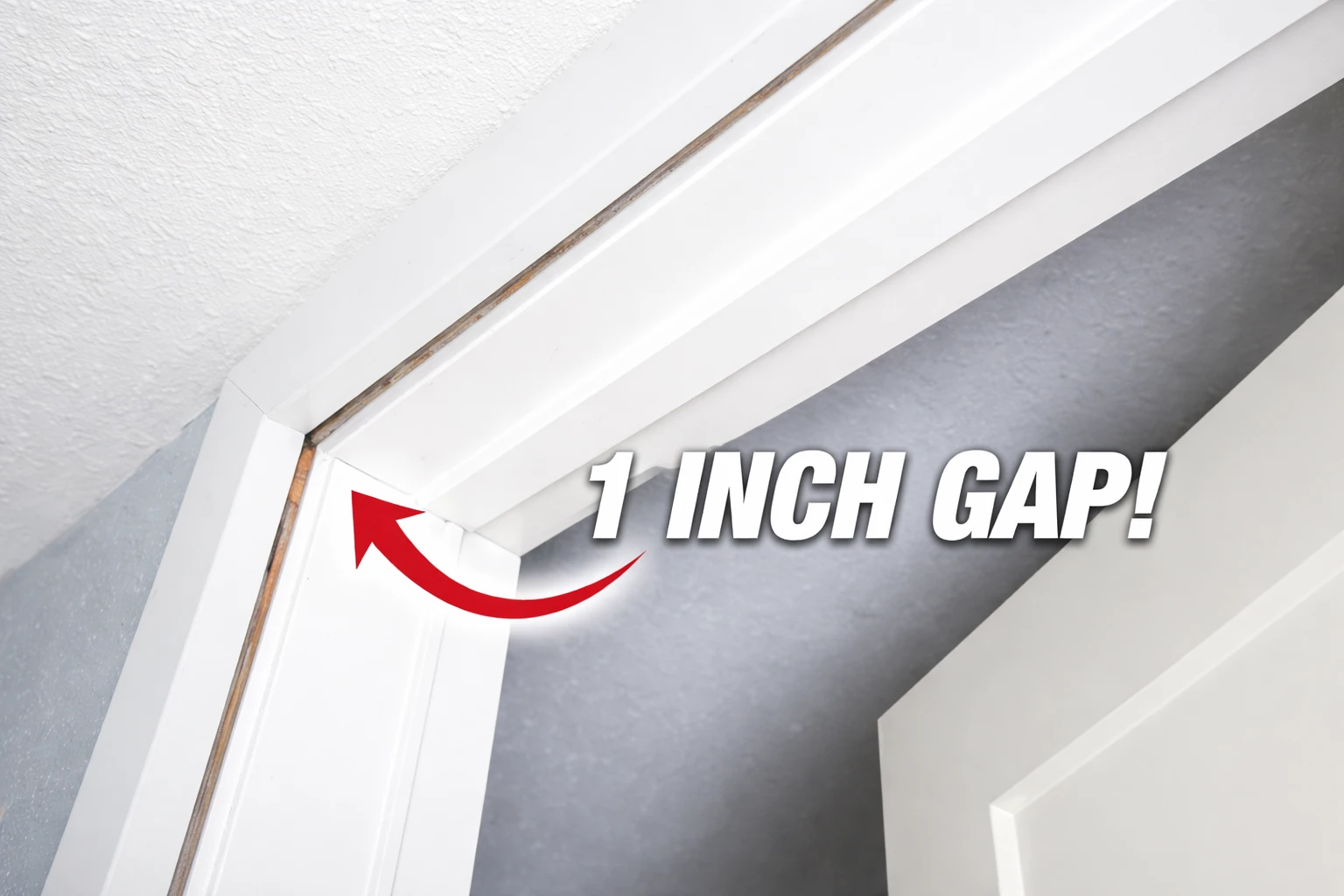
This process is gradual and often unnoticed until drafts or uneven door spacing become visible. Older homes, in particular, are more prone to this type of change.
Seasonal expansion and contraction
Wood is a living material. It reacts to moisture and temperature, expanding in humid conditions and contracting in dry air. During colder months, interior doors often shrink slightly, revealing gaps that were hidden during warmer seasons.
This seasonal movement explains why some homeowners notice drafts only at certain times of the year. The door itself has not failed; it is simply responding to its environment.
Improper installation
Doors that were installed quickly or without precise measurements may not sit square within the frame. Over time, even a small initial error can turn into noticeable gaps as the house settles or materials shift.
Wear and tear on hinges
Hinges carry the full weight of a door every time it opens and closes. Over years of use, screws loosen, metal wears down, and doors begin to sag. This sagging creates uneven spacing, often most visible at the top corner opposite the hinges.
Each of these causes requires a slightly different approach, which is why diagnosis matters before repair.
How to identify problem areas around an interior door
Some gaps are obvious, while others are subtle enough to escape casual notice. Yet even the smallest openings can allow air movement that affects comfort and efficiency.
Careful observation often reveals the issue. Light shining through door edges, uneven spacing along the frame, or a door that no longer closes smoothly are all signs worth investigating.
Common warning signs include
- Light visible around door edges in a dark room
- Drafts felt when walking past the door
- Noticeable temperature differences between rooms
- Dust accumulation near door frames is caused by the airflow
A simple hand test is surprisingly effective. Slowly move your hand along the door’s perimeter while the heating or cooling system is running. Even gentle air movement can be felt and traced back to its source.
Simple DIY solutions to fix door gaps
Not every energy efficiency upgrade requires professional tools or major renovation. Many interior door gaps can be addressed with simple, affordable solutions that deliver immediate results.
Weatherstripping for interior doors
Weatherstripping is often associated with exterior doors, but it works just as well indoors. Thin strips installed along the frame create a soft seal that blocks airflow without interfering with door movement.
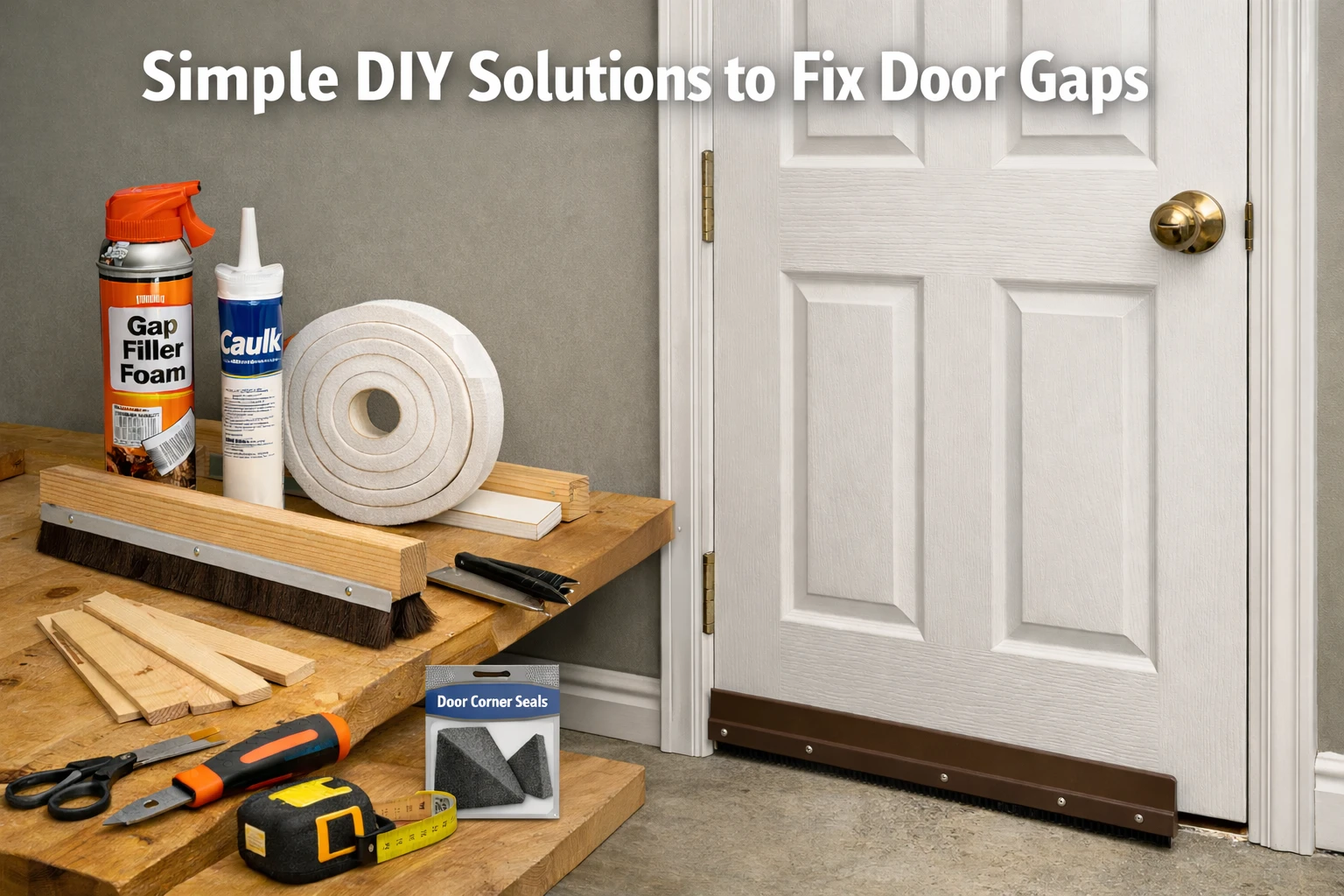
This solution is especially effective for side and top gaps, where air leakage is most common. Modern weatherstripping materials are discreet, durable, and easy to customize.
Benefits of weatherstripping
- Limits air transfer between rooms
- Improves thermal stability
- Reduces noise transmission
- Requires minimal tools and time
Door sweeps for bottom gaps
Bottom gaps are among the most common and most impactful. Air naturally flows at floor level, making these gaps a major contributor to drafts.
Installing a door sweep creates a flexible barrier that moves with the door while sealing the gap below.
Steps to install a door sweep
- Measure the exact width of the door
- Trim the sweep for a precise fit
- Secure it along the bottom edge
- Open and close the door to test alignment
Fixing the gap at the bottom of an interior door often delivers the fastest improvement in comfort.
Adjusting or tightening hinges
Sometimes the problem is not the door itself but its hardware. Loose hinge screws allow the door to tilt and sag. Tightening or replacing screws can lift the door back into its proper position and reduce gaps instantly.
If hinges are worn or bent, replacement may be the most effective option, restoring proper alignment and balance.
Structural adjustments for long-term efficiency
When simple fixes are not enough, deeper adjustments may be required. These solutions focus on correcting alignment issues that developed over time.
Re-aligning the door frame
If the frame has shifted, weatherstripping alone will not solve the problem. In these cases, shimming or adjusting the frame brings it back into alignment. While this requires more effort, it offers a long-lasting solution.
Planning the door edges
Warped doors may create uneven gaps along their edges. Carefully planning the affected area allows the door to sit properly within the frame again. This process must be done gradually to avoid creating new gaps elsewhere.
Replacing outdated doors
Older doors may no longer match modern standards of fit and performance. Replacing them with well-constructed, properly sized interior doors can dramatically improve both efficiency and visual appeal.
Sometimes the most effective energy-saving upgrade is simply choosing a door that fits the space as it should.