
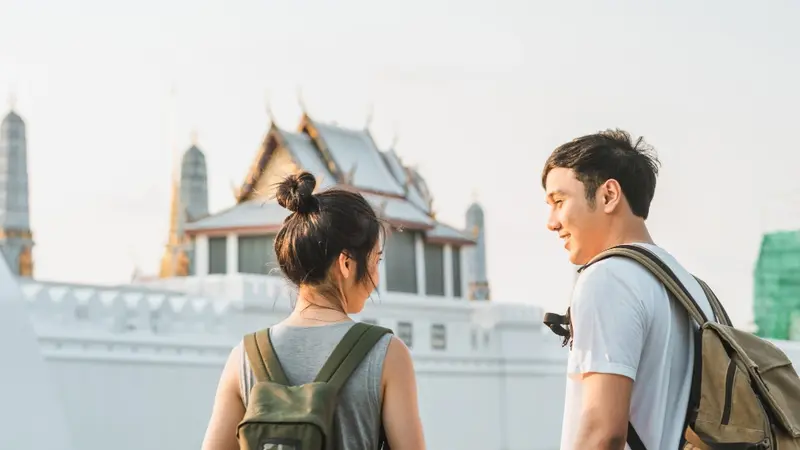
By a long-term Bangkok resident
Intro: The difference between visiting and living
Bangkok makes a spectacular first impression. It’s loud, colour full, contradictory, and unapologetically alive. Visitors arrive with open eyes and packed schedules, and the city responds with temples, markets, rooftop views, and stories that feel compressed into a few unforgettable days.
Living here is something else entirely.
After enough time, Bangkok stops performing and starts revealing. The spectacle fades, not because it becomes boring, but because it becomes familiar. What replaces it isn’t disappointment; it’s texture. Living here turns Bangkok from a destination into a system, a rhythm, a place where meaning accumulates quietly rather than all at once.
Pace vs planning
Visitors experience Bangkok through planning. Days are shaped by bookings, routes, opening hours, and the soft anxiety of “not missing anything.” Time feels scarce. Every traffic delay feels personal.
Residents move differently. We operate on instinct more than intention. The city becomes less about where you’re going and more about how you’re moving. The pace slows, paradoxically, in one of the world’s busiest cities.
Neighbor hood familiarity vs attractions
Visitors know Bangkok by landmarks. Residents know it by corners. We measure distance in coffee stalls, quiet shortcuts, and streets that feel “off” after dark. Familiarity doesn’t erase wonder, it relocates it. A side street that smells like grilled pork at dusk. A temple you pass daily but only enter once, on a weekday afternoon when no one is watching.
This is something the Bangkok guidebooks can’t quite capture: not the city as a list of places, but as a map of personal associations.
Transport, routines, and time
Nothing exposes the difference between visiting and living faster than transport. For visitors, transport is an obstacle to overcome. For residents, it’s part of the day’s emotional weather. A delayed train shifts your mood. A motorcycle taxi at the right moment feels like a small miracle. You stop measuring journeys by distance and start measuring them by stress. Need more details to Global Travel Mag visit.
Over time, Bangkok teaches patience, not as a virtue, but as a survival skill. You learn when to fight the city and when to let it win.
Why guidebooks miss this layer
Guidebooks explain Bangkok’s highlights, not its habits. They don’t teach you how the city breathes differently on Mondays, or how neighbor hoods change personalities after 9 p.m. They don’t tell you that some days, Bangkok asks for your attention, and other days it demands to be ignored.
This layer can’t be photographed. It’s learned through repetition, mistakes, and time spent doing ordinary things in extraordinary surroundings.
How experience-led exploration changes perception
The longer you stay, the less you “explore” and the more you notice. Exploration becomes accidental. You follow curiosity instead of checklists. Bangkok stops being a challenge to conquer and becomes a place to coexist with. The city rewards those who stop trying to decode it and start listening instead. That’s when frustration softens into respect, and eventually, affection.
A personal perspective
After years here, Bangkok no longer feels chaotic to me. It feels negotiated. We’ve reached an understanding. The city gives generously, but it expects flexibility in return. It’s not interested in efficiency or predictability, and once you stop demanding those things, life here becomes lighter.
That shift, from expectation to acceptance, is the real difference between visiting and living. Closing thought Visitors fall in love with Bangkok’s energy. Residents learn to live inside it. If you want to understand the city beyond its highlights, you don’t need more destinations. You need time, repetition, and the humility to let Bangkok change you instead of the other way around. That long view, earned slowly, one ordinary day at a time, is what we explore at Bangkok Driver.