
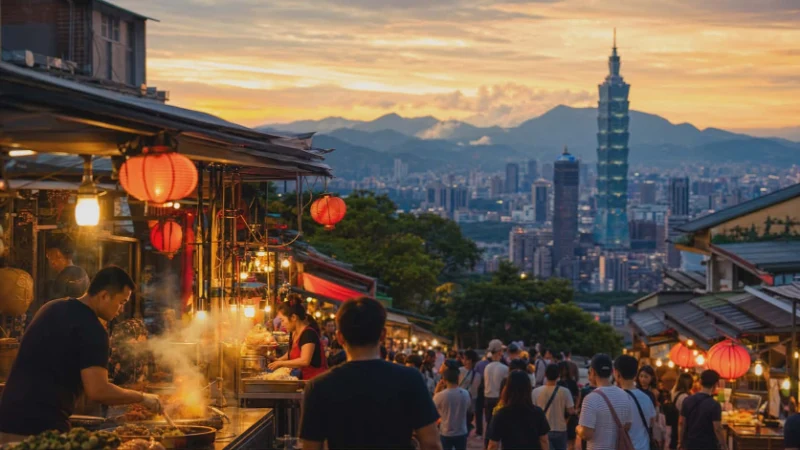
Taiwan is a compact, subtropical island that most Western, Japanese, Australian and New Zealand passport holders can enter visa-free for up to 90 days, provided the passport is valid for six more months. It runs on the New Taiwan Dollar, leans heavily on cash for night markets and small vendors, and ties everything together with the reloadable EasyCard, a fast High Speed Rail line down the west coast, and the spotless Taipei MRT. The most comfortable months are October, November and April; two weeks is the sweet spot for a first trip, though a focused week pairing Taipei with one nature region works well.
Entry, Arrival, and the First Hour on the Ground
Most travellers overthink the paperwork and underthink the logistics. Visa exemption covers 90 days for the UK, Europe, Canada, the USA, Japan, Australia and New Zealand, but it is an exemption rather than a visa, so it cannot be extended without leaving the island. No vaccination has ever been required, and the online arrival card is optional, you can fill the paper version on the plane. Processing at Taoyuan International runs roughly sixty to ninety minutes at busy hours, faster if you travel hand luggage only.
Clearing the airport is the moment to make three quick decisions: pick up cash, grab a SIM, and reach the city. The Airport MRT Express delivers you to Taipei Main Station in about thirty-five minutes, and a single token costs around one hundred and sixty NTD, less than a taxi at roughly fifty euros. Whatever you do, withdraw a little money before you leave the terminal, because the next thing Taiwan asks for, repeatedly, is cash.
Money, Cards, and Why Cash Still Wins
Taiwan feels modern enough that you expect contactless everywhere, then a beloved beef noodle stall waves your card away. Convenience stores and hotels reliably take plastic, but night markets, small restaurants and family shops often want New Taiwan Dollars, and some terminals quietly reject foreign cards. ATMs are everywhere, at the airport, in MRT stations and inside nearly every 7-Eleven, with withdrawal limits up to twenty thousand NTD that can trip your home bank if you ask for too much at once.
My standard advice is to carry two or three cards from different networks, because a card that fails at one machine often works at the next. Unusually for Asia, airport currency exchange in Taiwan is fair, faster than city banks, which stock few foreign notes. As a rough yardstick, Taiwan sits in the medium band for the region, cheaper than Japan, similar to South Korea, dearer than Thailand.
Getting Around: EasyCard, the HSR, and the Local Trains
The single smartest purchase is the EasyCard, the tap-and-go smartcard locals live by. It works on the MRT, city buses, short-distance local trains, YouBike and convenience stores, shaves around twenty percent off transit fares, and tops up with cash at any machine or store. What it does not cover is the High Speed Rail or reserved express trains, which need separate tickets, so do not assume one card unlocks the entire network.
Two rail systems run in parallel. The HSR rockets down the west coast at high speed but stops outside several city centres, while the slower Taiwan Railway reaches the small towns and the entire east coast loop. For long hops south the HSR wins on time; for Ruifang, Hualien or a stop near the gardens and old streets, the regular train is often more convenient. If you would rather skip the timetables entirely, a private operator such as Round Taiwan Round can stitch the scattered highlights into one door-to-door route.
Eating Your Way Through the Night Markets
Food is not a side quest in Taiwan, it is the main event, and the night markets are where the island shows off. Raohe and Ningxia reward first-timers more than the sprawling, touristy Shilin, and several stalls hold Michelin Bib Gourmand status. Work your way through grilled squid, pepper pork buns, oyster omelette, stinky tofu for the brave, and a mango shaved ice to finish, with a bubble tea, invented here, in hand.
Beyond the markets, breakfast is a distinct ritual of egg crepes, warm soy milk and fried dough, and convenience stores double as tea-egg counters and SIM-top-up points. Vegetarians have it easy, since a meaningful share of the population eats meat-free for religious reasons, look for the 素 symbol. Tipping is not customary and can even cause mild confusion, so resist the reflex.
Etiquette, Safety, and Reading the Room
Taiwan is consistently ranked among the safest countries on earth, with very low crime and solo female travellers reporting they feel comfortable walking at night. The real hazards are environmental rather than human: traffic where scooters do not always yield, plus the island’s position on the Ring of Fire, which brings the occasional earthquake or typhoon. None of this should deter you, it simply means watching the road and the forecast.
Small courtesies smooth everything. Stand on the right of escalators, never eat or drink on the MRT, and hand over money or cards with both hands in formal settings. In temples, dress modestly, keep your voice low, and enter on the right. A quiet xiexie goes a long way, and shouting at staff is the one thing locals genuinely find rude.
When to Go and How Long You Need
Aim for October and November or April, when humidity eases, rain thins out and crowds stay moderate. The plum rains arrive in May and June, and typhoon season runs roughly June through October, capable of suspending the HSR or closing an airport for a day. Winter is mild, excellent for hot springs and early cherry blossoms, while July to September brings the heaviest heat and storm risk.
On duration, give the island more time than the map suggests. Distances look short but mountain roads and transfers eat hours, so a fortnight lets you circle without changing hotels nightly. If a week is all you have, base yourself in Taipei and add just one nature region, the east coast or the central mountains, rather than racing the whole loop.